


Tattooing will always involve some level of discomfort, but a professional tattoo experience should also focus on keeping the client comfortable, informed, and properly prepared.
In 2026, one of the biggest conversations around tattoo comfort is not about making tattoos completely painless. It is about using numbing products responsibly, preparing properly for the appointment, positioning the body comfortably, taking breaks when needed, and communicating with your artist throughout the session.
At California Ink Tattoo in Bangkok and Phuket, we regularly work with clients sitting through everything from small tattoos to multi-day projects. Comfort matters, especially during longer sessions, but it should never come at the expense of safety or tattoo quality.
Does Numbing Cream Make Tattoos Painless?
Numbing creams can reduce sensation for some people, but they should not be viewed as a guarantee of a pain-free tattoo.
How much discomfort you experience depends on many factors, including the tattoo placement, session length, individual pain tolerance, tattooing technique, and how your body responds during the session.
Different parts of the body can also feel very different.
Areas with less padding, areas close to bone, and sensitive locations may feel more intense than other parts of the body.
Most importantly, stronger numbing does not automatically mean better or safer numbing.
Why Numbing Cream Requires More Care in 2026
Topical numbing products have received increased regulatory attention in recent years.
The U.S. Food and Drug Administration has warned consumers about certain topical pain-relief products marketed for cosmetic procedures including tattooing. The FDA has specifically raised concerns about products containing high concentrations of lidocaine and about application methods that can increase the amount absorbed through the skin.
The FDA advises U.S. consumers not to use over-the-counter topical pain-relief products containing more than 4% lidocaine and warns against heavy application over large areas, use on irritated or broken skin, and covering treated skin with plastic or other dressings because these practices can increase the risk of serious side effects.
In 2025, the FDA also issued warning letters involving several TKTX-branded numbing products marketed for tattooing and other cosmetic procedures.
These are U.S. regulatory recommendations rather than Thai regulations, but they illustrate an important point for tattoo clients anywhere: do not assume a numbing product is safe simply because it is sold online or marketed specifically for tattoos.
Tell Your Tattoo Studio Before Using Numbing Cream
If you are considering numbing cream, discuss it with the studio before your appointment.
Do not arrive after applying an unfamiliar product without telling your artist.
Your artist should know what has been applied to the skin because products and individual skin responses can differ.
If you have previously experienced irritation or another reaction to a numbing product, tell the studio before your tattoo begins.
Anyone with concerns about whether a topical anesthetic is appropriate for them should speak with a qualified healthcare professional or pharmacist and follow the product’s instructions.
The goal is not to use the strongest product possible. The goal is to approach tattoo comfort responsibly.
You Do Not Have to Use Numbing Cream
Numbing cream is optional.
Many clients complete tattoos without it, including longer sessions.
Some people prefer to experience the tattoo without numbing products, while others are particularly concerned about pain or are planning work in a sensitive area.
There is no single approach that is right for every person.
If you are nervous about the pain, tell us. A consultation is a much better time to discuss your concerns than trying something unfamiliar immediately before the appointment.
Comfort Is More Than Numbing
One of the biggest misconceptions about tattoo comfort is that everything depends on numbing cream.
For a long tattoo session, physical comfort can become just as important.
Remaining in one position for several hours can create stiffness or fatigue even when the tattooed area itself is manageable.
Professional tattoo furniture, supportive positioning, and the ability to adjust when appropriate can make longer sessions easier.
At our Bangkok tattoo studio and Phuket tattoo studio, our artists also need to position clients so they can work accurately and consistently. The best position therefore needs to balance client comfort with access to the tattoo area and the artist’s ability to produce precise work.
Preparing Your Body Before a Tattoo
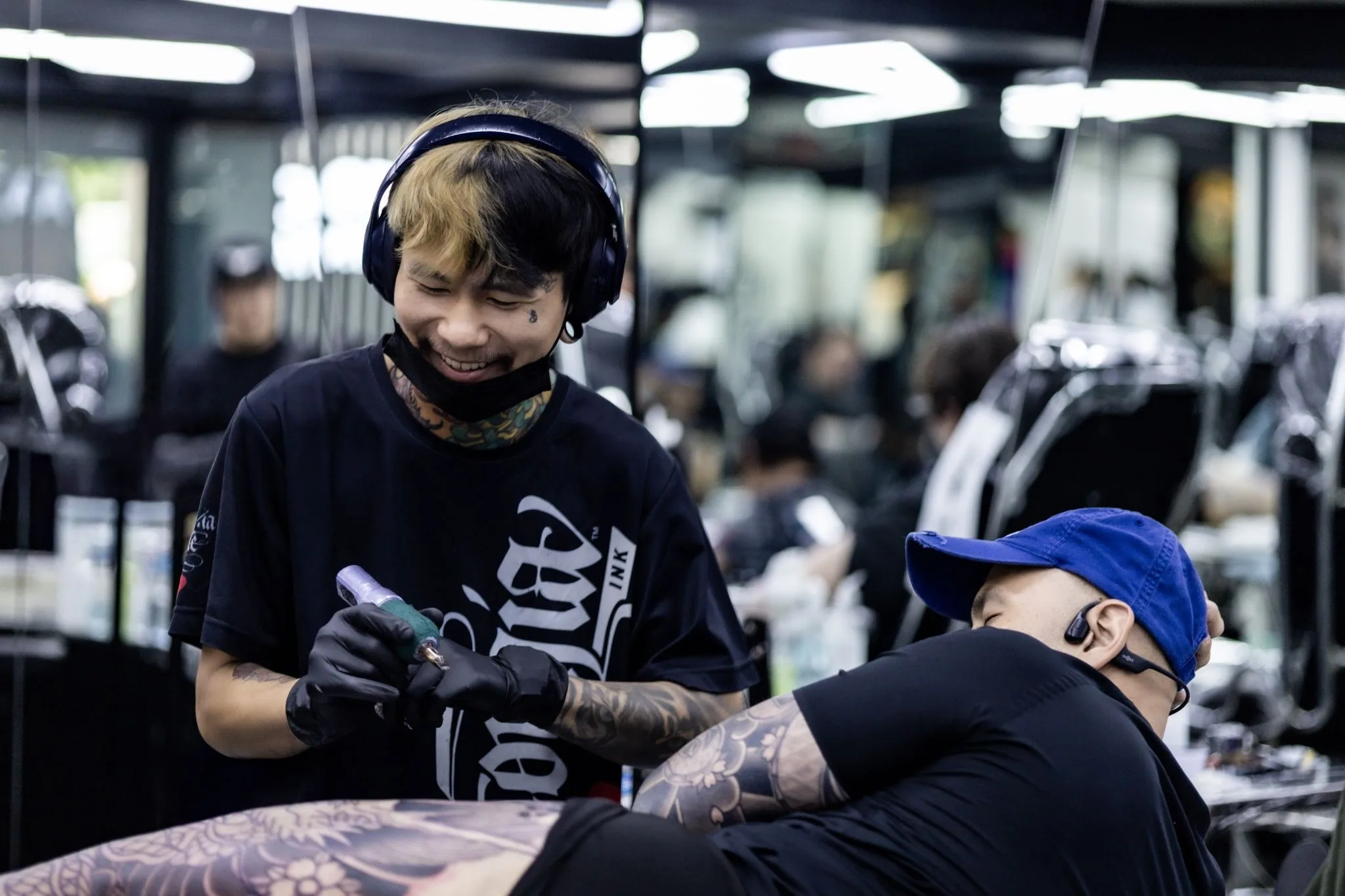
What you do before arriving can affect how comfortable you feel during your appointment.
A good starting point is simple:
- Get a proper night’s sleep.
- Eat a good meal before your appointment.
- Stay hydrated.
- Avoid arriving exhausted or on an empty stomach.
- Wear comfortable clothing that gives the artist easy access to the tattoo area.
- Bring anything you reasonably need for a longer session.
- Tell the team if you begin feeling unwell during the appointment.
For larger tattoos, preparation becomes even more important because you may be sitting for several hours or returning for additional sessions.
Breaks During Long Tattoo Sessions
Taking a break does not mean you are bad at handling tattoo pain.
During longer sessions, short breaks can allow you to stretch, use the bathroom, drink water, eat if appropriate, and reset before continuing.
The timing of breaks also needs to work with the tattooing process, so communicate with your artist rather than repeatedly stopping without warning.
If you need a break, say so.
For very large projects, we may also recommend dividing the work across multiple sessions or days instead of trying to force everything into one sitting.
The goal is to complete the tattoo properly, not to turn the appointment into an endurance competition.
Positioning Can Make a Big Difference
Tattoo placement determines how you may need to sit or lie during the session.
An arm tattoo may allow a relatively comfortable seated position, while back, rib, leg, chest, or other placements can require different positions so the artist has proper access.
For larger pieces, you may remain in one position for a considerable amount of time.
If something becomes uncomfortable, tell your artist. Small adjustments may sometimes help without affecting the artist’s ability to work.
However, it is also important to remain as still as possible while the artist is actively tattooing.
Longer Tattoos Need Better Planning
Large-scale tattooing is different from sitting for a small piece.
A sleeve, full leg, back piece, chest project, or other major tattoo may involve many hours of work and potentially multiple sessions.
Before beginning a large project, we consider the design, body placement, estimated tattooing time, artist schedule, and how the work can be divided efficiently.
At California Ink, large projects may sometimes be completed over consecutive days depending on the tattoo and the client.
Planning the sessions properly can be more useful than simply trying to tolerate the longest session possible.
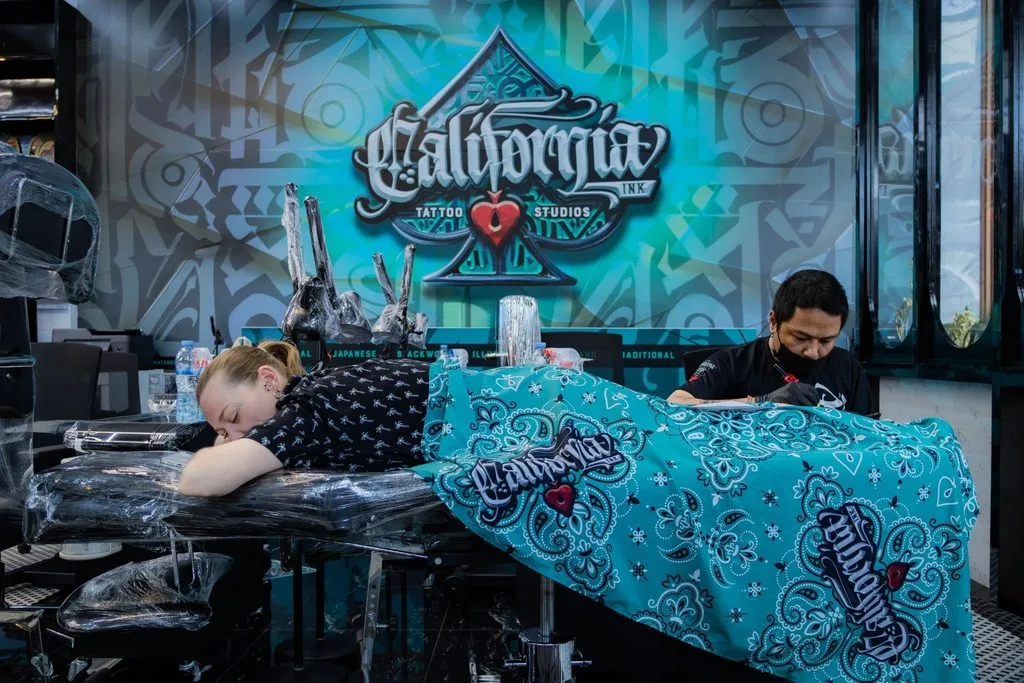
Communication Is Still the Most Important Comfort Tool
No chair, cream, or technique replaces communication between the client and artist.
Tell your artist if you feel unwell, experience an unexpected skin reaction, need a break, or notice something that feels significantly different from normal tattoo discomfort.
You should also tell the studio before your appointment about known allergies, previous reactions to numbing products, or other relevant concerns.
A professional tattoo session should never make you feel that you have to remain silent simply to prove that you can handle the pain.
Our tattoo artists tattoo people every day. Different clients have different pain tolerances, and there is nothing unusual about needing to communicate during a session.
Bangkok and Phuket Tattoo Sessions
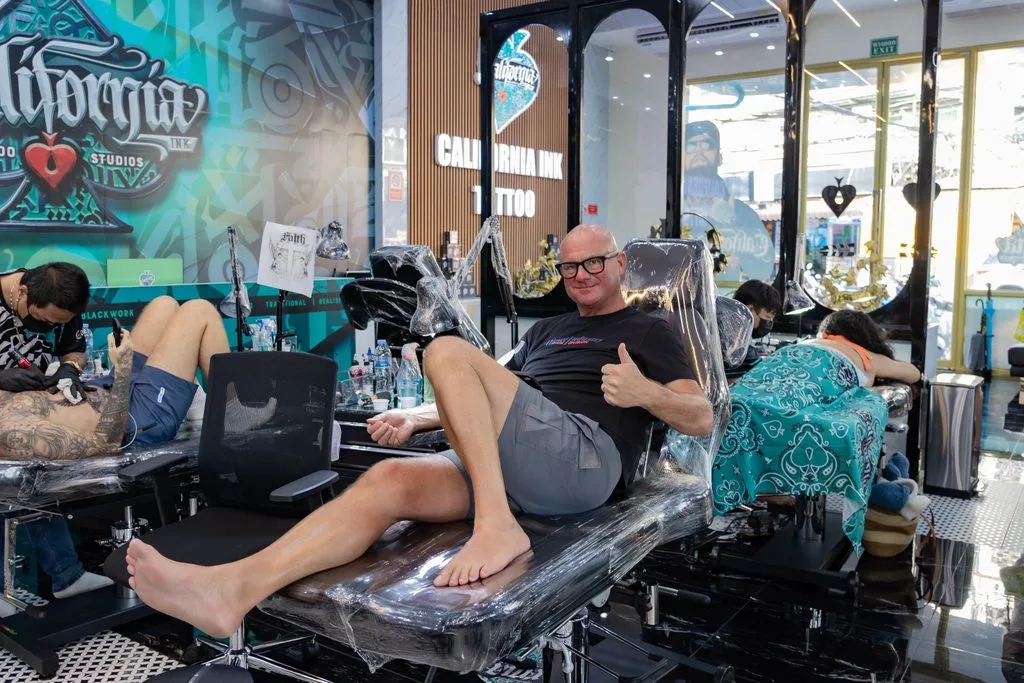
California Ink has studios in both Bangkok and Phuket, and both locations regularly work with international travelers as well as clients living in Thailand.
Whether you are planning a small tattoo or a multi-day project, our team can discuss the expected session length, placement, design, preparation, and comfort considerations before tattooing begins.
For travelers, it is also worth considering what you have planned after your appointment.
Swimming, strong sun exposure, beach activities, and other parts of a Thailand holiday may need to be planned around a fresh tattoo and proper tattoo aftercare.
This is particularly important for clients visiting our Phuket studio during a beach holiday.
Frequently Asked Questions
Can I use numbing cream before a tattoo?
Numbing products are available, but you should discuss any product you intend to use with your tattoo studio beforehand and follow appropriate product and professional guidance. Do not assume that a stronger product is automatically safer or better.
Does numbing cream make a tattoo completely painless?
No product should be treated as a guarantee of a completely pain-free tattoo. Individual experiences vary depending on placement, session length, pain tolerance, the product used, and other factors.
Is tattoo numbing cream safe?
Safety depends on the ingredients, concentration, amount applied, application method, individual health factors, and other considerations. Regulators including the U.S. FDA have issued safety warnings concerning certain topical pain-relief products marketed for tattooing and cosmetic procedures.
Do I need numbing cream for a long tattoo session?
Not necessarily. Many clients complete long tattoo sessions without numbing products. If you are concerned about discomfort, discuss it with the studio before your appointment so you can understand your options.
Can I take breaks during my tattoo?
Yes. For longer sessions, breaks can be useful for stretching, hydration, eating when appropriate, or simply resetting. Coordinate breaks with your artist so they fit naturally into the tattooing process.
What should I eat before a tattoo?
Have a proper meal before your appointment rather than arriving hungry. Staying hydrated and getting enough sleep beforehand can also help you feel better during a long session.
Should I tell my artist if the tattoo hurts too much?
Yes. Communication is important. If you feel unwell, experience an unusual reaction, or need a break, tell your artist.
Is tattoo comfort handled the same way in Bangkok and Phuket?
The same overall principle applies at both California Ink locations: prepare properly, communicate with your artist, plan longer projects appropriately, and prioritize both comfort and tattoo quality.
A Better Tattoo Experience Starts Before the Needle
Tattoo comfort is not about promising a painless experience.
It starts with good preparation, realistic expectations, responsible decisions around numbing products, comfortable positioning, sensible breaks, and clear communication with your artist.
At California Ink Tattoo Bangkok and Phuket, our goal is to make every client feel comfortable and informed while never compromising the quality of the tattoo.
If you are worried about pain, planning a long session, or considering numbing cream, talk with our team before your appointment. We can explain the tattoo process, expected session length, and how to prepare so you arrive knowing what to expect.